

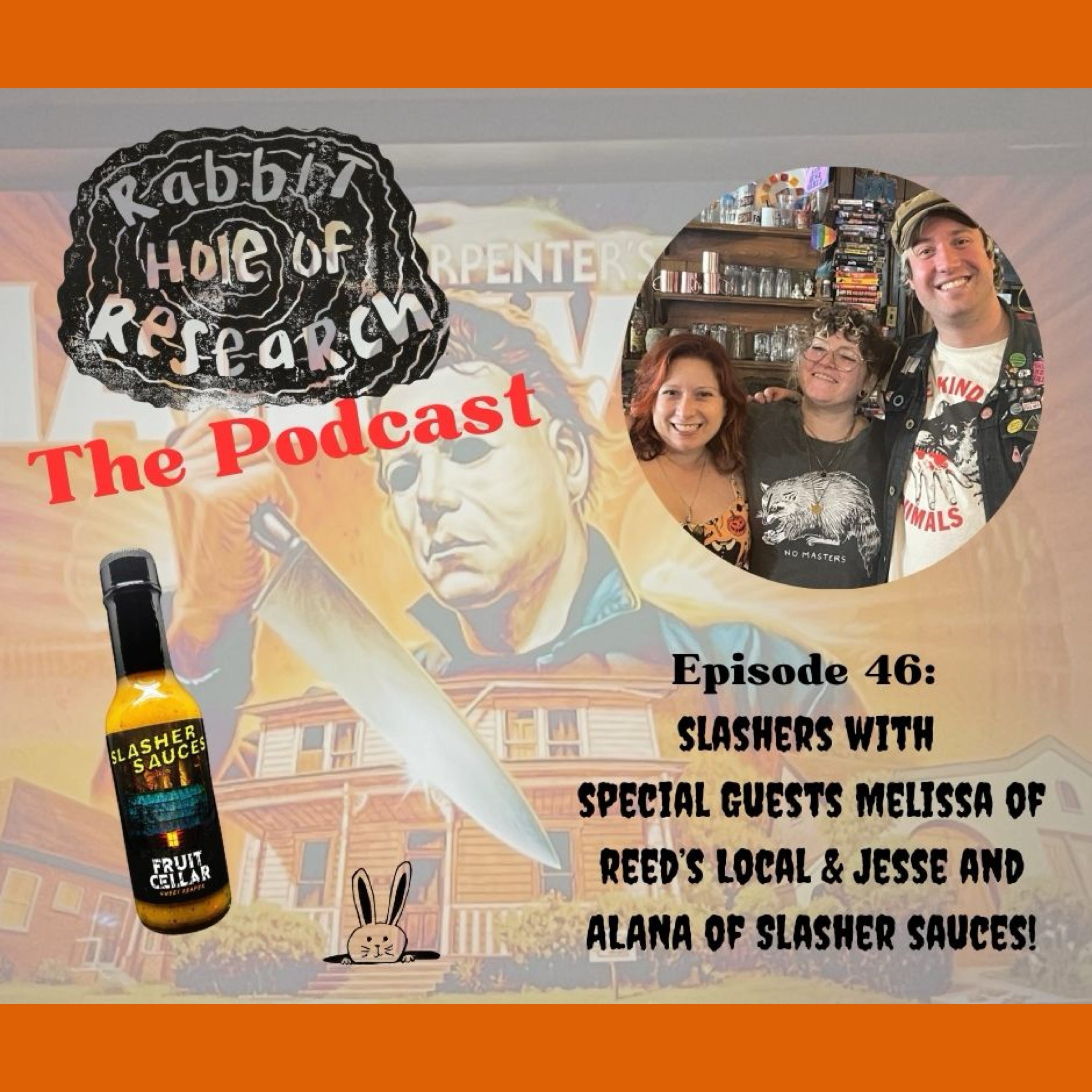
Recorded live at Reed’s Local in Avondale, Chicago, this episode of Rabbit Hole of Research finds hosts Joe, Nick, and Georgia joined by Jesse and Alana from Slasher Sauces—a boutique hot sauce brand—and Melissa, co-owner of Reed’s Local. Together they carve into the slasher film genre, tracing its bloodline from early cinematic roots to modern reinventions. The crew explores the psychology of fear, predator–prey instincts, and the science behind why we love to be scared. They wander through the genre’s evolution—from cult classics to global influences and tech-age terror—while swapping favorite slashers and horror stories over drinks and heat. Equal parts film theory, folklore, and fiery humor, this episode celebrates how slashers slice through culture, science, and spice alike.
Links from Reed’s and Slasher Sauces
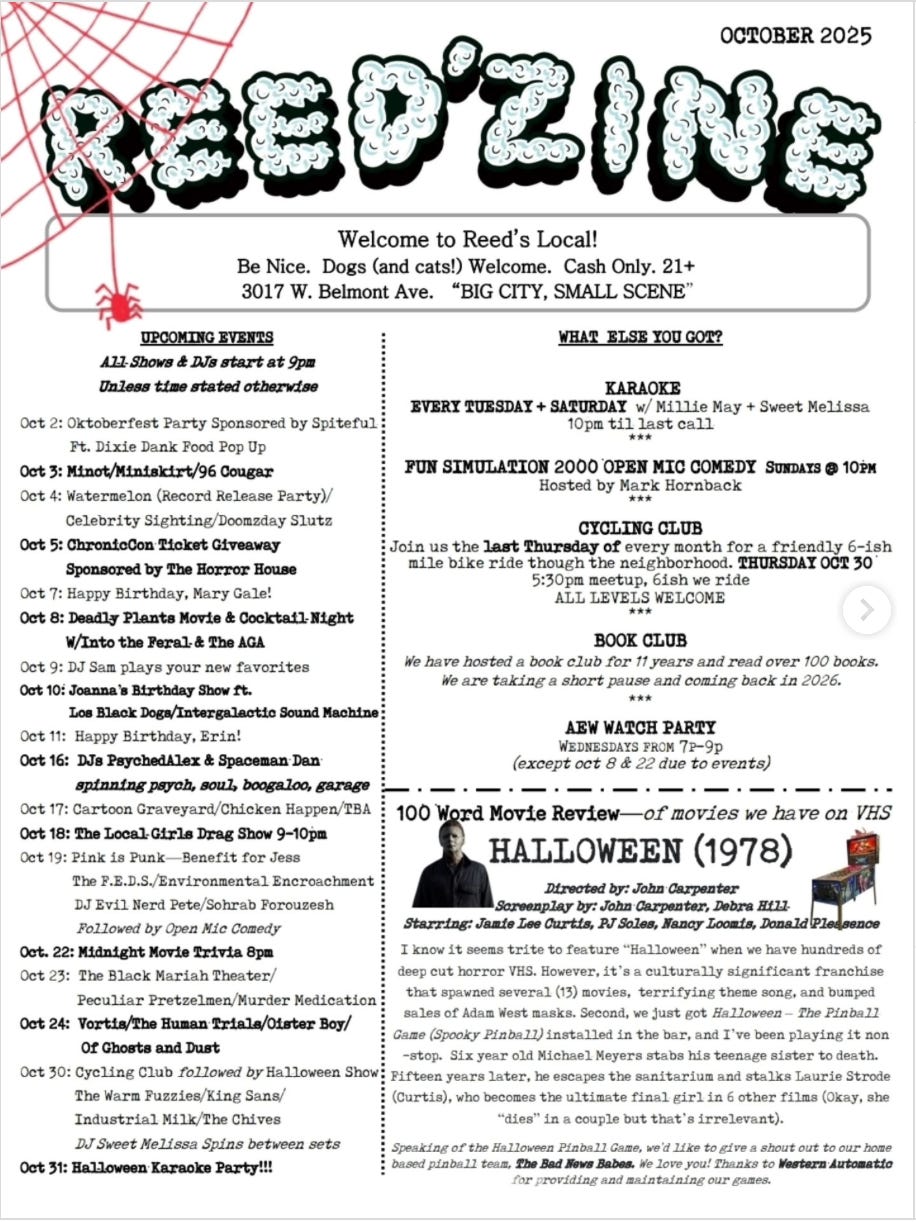
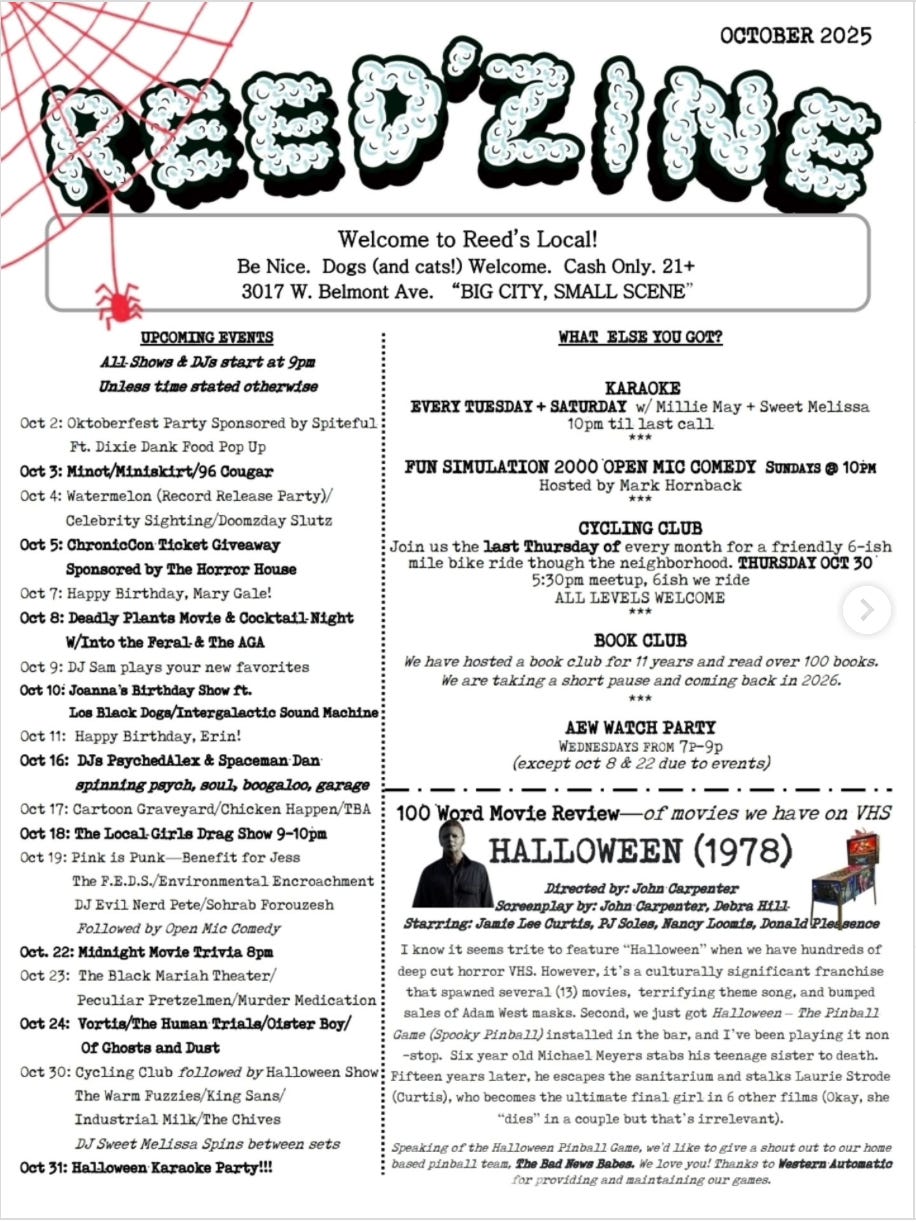
Reed’s Local October Events—Go pick up a copy of the Reed’s Zine!
Check out what the RHR crew is creating:
Joe:
Red Line: Chicago Horror Stories Anthology featuring a new story by Joe!
Chicago Writers Association Podcast: Talkin’ Science Fiction with Joe Austin
Essay by Joe: From Beyond Press: Specific Knowledge: Jotham Austin, II, PhD on Transformations in Fiction
Joe explores how many calories it would take to transform into monsters across sci-fi and horror—think 222 Big Macs and tubs of Cherry Garcia.
Georgia:
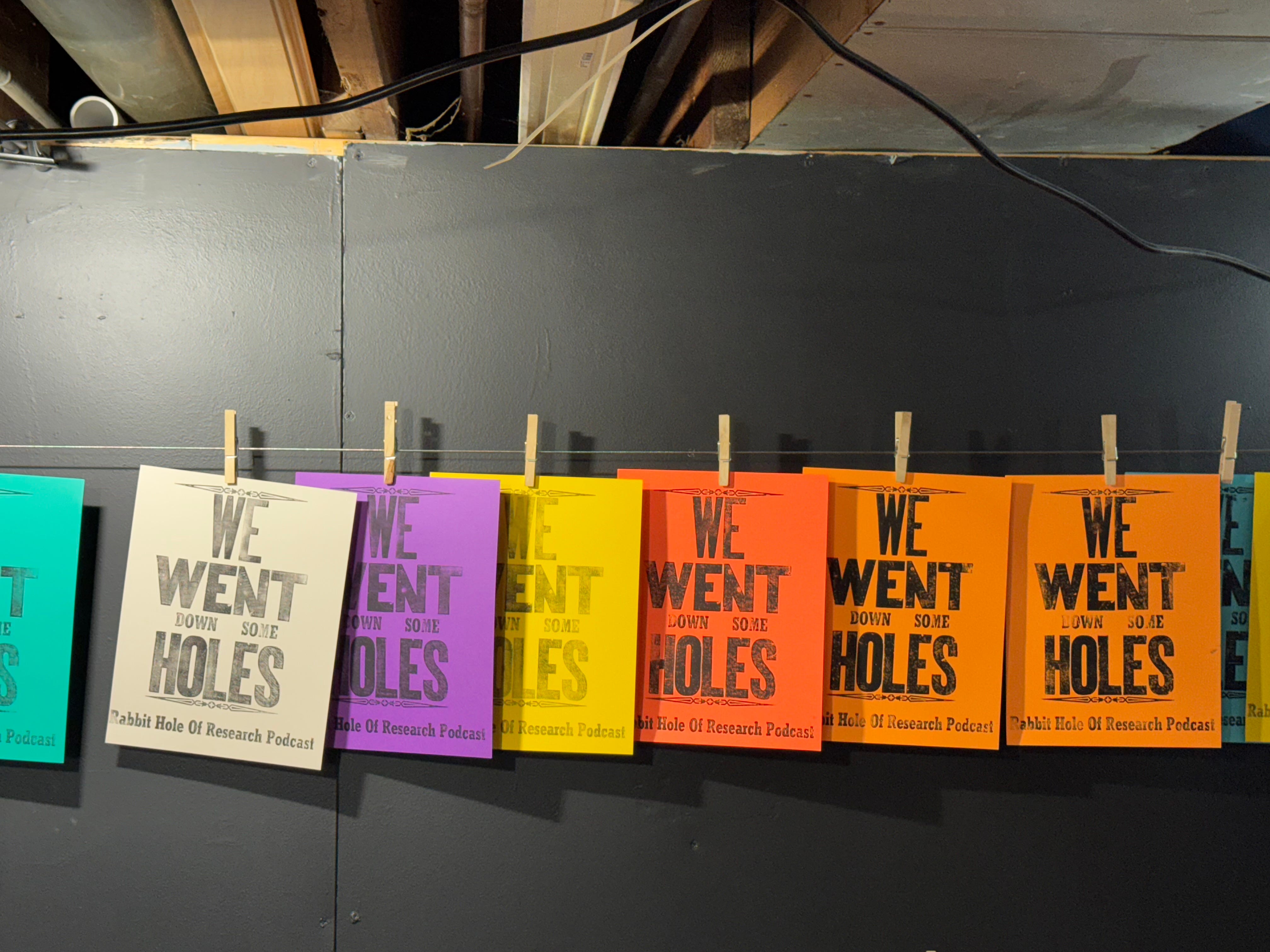
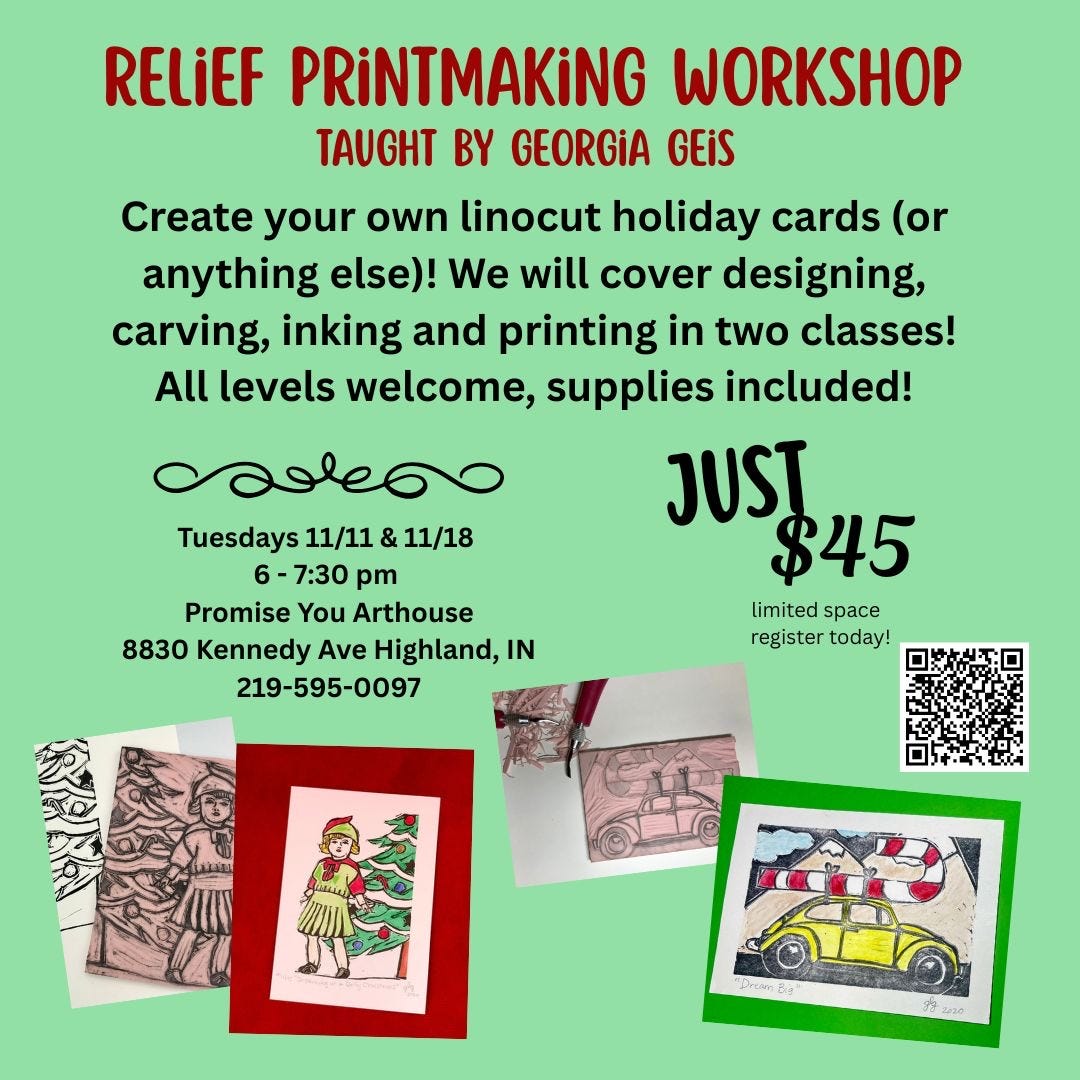
Printmaking Class at Promise You ArtHouse on November 11th. Click here for Details or scan the QR code in image to register!
It’s Science for Weirdos
Want to support the show? Tell your friends. Follow us on social media, Discord, share the podcast, and let us know what topics you are excited about. Leave a Comment. And for email alerts sign-up for the Substack newsletter and never miss an episode, exciting updates or the bonus images we talk about on the episodes.


We want to Hear From You (leave a comment):
Which slasher still stalks your dreams?
What was your favorite slasher kill?
Who is your favorite Final Girl or Boy?
What’s your favorite slasher movie/book?
Future Episodes & Events
Episodes:
Episode 47 – Who Goes There? The Thing and The Shape of Paranoia
Guests: Todd Thyberg (Angel Bomb) and Bill Halliar
A deep-dive into the horror of isolation, distrust, and shapeshifting terror through
the lens of The Thing. Expect philosophical chills.
Episode 48 – Perception vs. Perspective
Guest: Katie Lichte-Mullenix
Is your brain lying to you? An exploration of perception, illusion, and how the mind constructs reality.
Episode 49 – The Heart of a Superhero
Guest: Rengasayee (Sai) Veeraraghavan
We crack open the anatomy of heroism—how courage, biology, and myth shape our modern superheroes.
Episode 50 – Gremlins and Holiday Science
Guest: Chris Guzman
A festive foray into chaos theory, creature features, and the secret science behind cinematic holiday mayhem.
Episode 51 – Season 2 Recap: PJs and Holiday Movies
Guests: ???
Grab your pajamas and join the crew as we toast two seasons of curiosity, chaos, and science—plus a sneak peek at what’s coming in Season 3.
Events:
Joe will be reading with 5 other story tellers at the Printer’s Row Wine Shop and Bar on November 1st.
2pm-4pm
Joe will be reading with other story tellers at the Experimental Station in Hyde Park on November 1st.
5:30-8pm
For more stuff (Images, Episode Highlights, events, etc), subscribe to our Substack newsletter!
Stay curious, stay speculative, stay safe, and we’ll catch you in the next rabbit hole. Love Y'all!
Show Notes & Fun facts
The First Slash: The roots of slasher cinema stretch back to Victorian London with Sweeney Todd—a barber who used his razor as the first cinematic blade long before Michael Myers picked up a knife.
Science of Screams: The hosts break down how the brain’s amygdala and startle reflex are engineered by filmmakers—every jump scare is a mini neuroscience experiment.
Global Bloodlines: Slashers didn’t stay in suburbia—films like Japan’s Cure and Korea’s I Saw the Devil evolved the killer archetype into a global language of fear.
The Final Girl Lives On: From Laurie Strode (Halloween) to modern survivors, the “Final Girl” trope mirrors changing ideas of resilience, trauma, and autonomy.
Sauce & Slashers: Jesse and Alana of Slasher Sauces share how they blend horror fandom and culinary creativity—the perfect burn to match a midnight movie marathon.
Books, Media, and References from the Episode
The Lodger: A Story of the London Fog (1927, dir. Alfred Hitchcock) — one of the earliest cinematic depictions of a serial killer, inspired by Jack the Ripper.
M (1931, dir. Fritz Lang) — a psychological exploration of compulsion and morality that laid groundwork for later humanized killers.
Psycho (1960, dir. Alfred Hitchcock) — the blueprint for the modern slasher, bridging horror and psychology.
Black Christmas (1974, dir. Bob Clark) — first to formalize the genre’s structure of the unseen stalker and Final Girl dynamic.
The Texas Chain Saw Massacre (1974, dir. Tobe Hooper) — raw, documentary-style horror that transformed rural isolation into primal terror.
Halloween (1978, dir. John Carpenter) — standardized the formula: masked killer, teenage victims, suburban dread.
Friday the 13th (1980, dir. Sean S. Cunningham) — franchised the model, turning moral panic into ritualized entertainment.
A Nightmare on Elm Street (1984, dir. Wes Craven) — fused supernatural dream logic with the slasher’s body count.
Chopping Mall (1986, dir. Jim Wynorski) — mall security robots turned killers; an example of 80s genre hybridization.
Hellraiser (1987, dir. Clive Barker) — the metaphysical slasher: pain, pleasure, and punishment reimagined.
Silent Night, Deadly Night (1984, dir. Charles E. Sellier Jr.) — Christmas horror that sparked controversy for “Santa-as-slasher.”
Candyman (1992, dir. Bernard Rose) — urban legend horror rooted in race, myth, and collective trauma.
Scream (1996, dir. Wes Craven) — postmodern horror that exposed and exploited genre awareness.
Beyond the Mask: The Rise of Leslie Vernon (2006, dir. Scott Glosserman) — mockumentary-style satire exploring the making of a slasher villain.
Creep (2014, dir. Patrick Brice) — minimalist, first-person psychological horror redefining intimacy and menace.
It Follows (2014, dir. David Robert Mitchell) — fear as a contagious force, blending realism and metaphor.
Terrifier (2016, dir. Damien Leone) — modern grindhouse brutality and practical-effects splatter.
Hush (2016, dir. Mike Flanagan) — survival horror reinvented through sensory limitation.
Invisible Man (2020, dir. Leigh Whannell) — domestic abuse allegory within sci-fi horror.
Hollow Man (2000, dir. Paul Verhoeven) — scientific hubris and voyeuristic violence echoing Invisible Man’s lineage.
Killer Piñata (2015, dir. Stephen Tramontana) — Chicago-made horror comedy that turns absurdity into cult charm.
M3GAN (2023, dir. Gerard Johnstone) — AI-driven slasher evolution questioning autonomy and control.
Thankskilling (2009, dir. Jordan Downey) — parody slasher where a murderous turkey skewers genre tropes.
Books
Sweeney Todd: The String of Pearls (1846–1847, attributed to James Malcolm Rymer or Thomas Peckett Prest) — Victorian serial that introduced the human killer as a ritualized predator; the earliest proto-slasher narrative.
The Lodger (1913, Marie Belloc Lowndes) — literary inspiration for Hitchcock’s 1927 film and a direct link to Jack the Ripper mythology.
The Final Girl Support Group (2021, Grady Hendrix) — modern horror novel reimagining classic “Final Girl” survivors years after their trauma, blending genre homage with psychological realism.
Episode Highlights
00:00 — Introduction and Welcome
Joe, Nick, and Georgia kick off a live recording from Reed’s Local in Avondale, setting the stage for a deep dive into the slasher genre.
00:16 — Meet the Team and Guests
Meet Jesse and Alana from Slasher Sauces and Melissa, co-owner of Reed’s Local, as they join the Rabbit Hole crew to blend horror, humor, and hot sauce.
01:39 — Discussing Slashers
The group opens with what defines a “slasher,” touching on the human predator, the thrill of pursuit, and the ritual of fear.
01:56 — History of Slasher Films
From Sweeney Todd to Psycho to Black Christmas, the crew traces the slasher’s bloody lineage through pop culture and moral panic.
07:21 — Favorite Halloween Movies
Everyone shares their essential Halloween watches—classics, cult hits, and comfort horrors.
08:26 — Slasher Sauce Origins
Jesse and Alana reveal how their love of horror inspired Slasher Sauces, pairing creative spice with killer movie themes.
14:55 — Psychological Aspects of Slashers
The hosts break down the neuroscience of fear—how sound, lighting, and timing trigger primal survival instincts.
32:21 — Evolution and Decision-Making in Horror
Discussion turns to how victims’ choices, coincidences, and human error shape the slasher’s narrative rhythm.
32:44 — Plot Convenience in Horror Films
Is “bad decision-making” part of the fun? The group debates whether horror depends on chaos or commentary.
33:29 — Learning from Slasher Movies
What can slashers teach us about vigilance, empathy, and pattern recognition? Maybe more than we admit.
34:21 — The Psychology Behind Slasher Killers
From repression to ritual, the team examines how killers mirror cultural anxieties and human obsession.
35:59 — Horror Video Games and Realism
Titles like Dead by Daylight and Until Dawn bring slasher logic into interactive fear—turning the audience into participants.
37:12 — The Importance of Overkill in Horror
They discuss spectacle vs. subtlety—when gore becomes art, and when it crosses into parody.
38:48 — The Concept of the Final Girl
Exploring gender, survival, and evolution—from Laurie Strode to The Final Girl Support Group by Grady Hendrix.
42:02 — Technology’s Impact on Modern Horror
AI, surveillance, and social media—how the slasher adapts when the mask becomes digital.
53:05 — Favorite Slashers and Recommendations
Everyone closes out with personal picks—underrated gems, modern standouts, and cult classics worth revisiting.
Join Rabbit Hole of Research on Discord: https://discord.gg/2nnmKgguFV
Subscribe and Share our Substack newsletter to get email updates, never miss an episode, and spread the word!! Don’t forget to give us 5 stars or a like!